

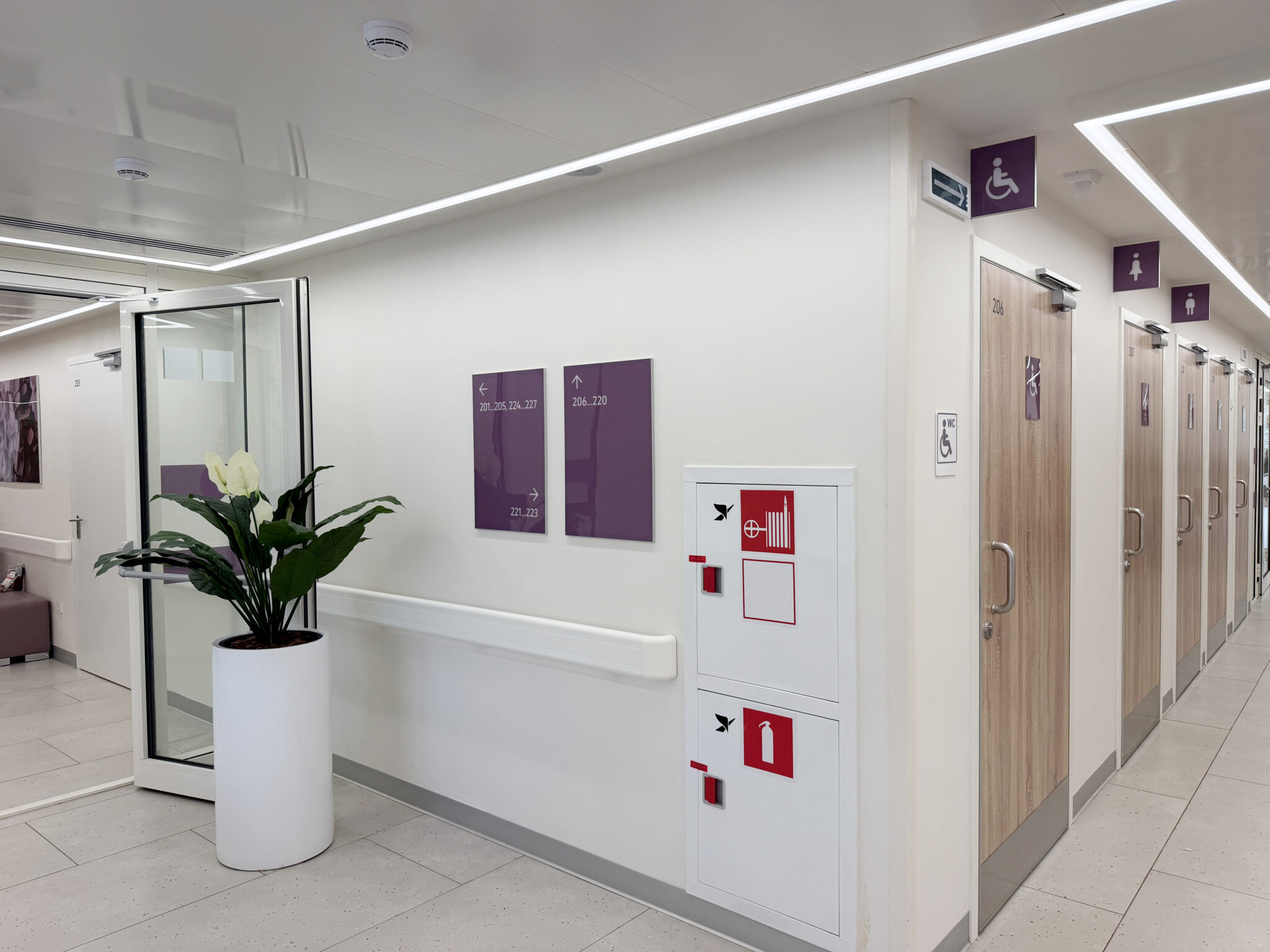
From the moment a patient arrives at a medical office, signage plays an important role in shaping their experience. Patients may need to locate the correct entrance, check-in desk, exam room, laboratory, restroom, or specialty department, all while navigating an environment that may already feel unfamiliar or stressful. Clear, thoughtfully designed signage can make that process easier.
Healthcare facilities throughout Pennsylvania are increasingly looking for signage that combines functionality, accessibility, and visual appeal. Modern medical office signage solutions can help patients navigate confidently while reinforcing a healthcare organization’s brand and supporting applicable accessibility requirements. Here are several trends influencing today’s medical office environments.
Clear, Accessible Wayfinding Takes Priority
Healthcare facilities can be difficult to navigate, especially when they include multiple providers, departments, floors, or connected buildings. One of the most important trends in medical signage is an increased focus on creating simple, consistent wayfinding systems.
Effective wayfinding begins by considering the patient’s entire journey. Signage may be needed at entrances, elevators, intersections, reception areas, hallways, and individual rooms. Each sign should provide enough information to guide visitors without overwhelming them.
Modern healthcare wayfinding often incorporates:
- Easy-to-read typography
- High-contrast designs
- Consistent colors and terminology
- Recognizable symbols and icons
- Directional arrows
- Room and department identification
- Accessibility-conscious placement and design
Accessibility is particularly important in healthcare settings because facilities serve patients with a wide range of physical and visual abilities. Certain permanent signs may need to meet applicable ADA requirements involving features such as character size, contrast, mounting location, tactile lettering, or Braille.
Professional indoor signage solutions can help facilities develop a coordinated system that prioritizes readability while accounting for the requirements of each space.
Branded Signage Creates a More Cohesive Environment
Medical offices do not have to feel purely clinical. Another growing signage trend is integrating healthcare branding throughout the interior environment.
A facility’s logo, colors, typography, and other visual elements can be incorporated into reception signs, department identification, wall graphics, and directional signage. This creates consistency between the organization’s website, exterior signage, and physical office.
Well-designed medical office signage solutions can also help establish the atmosphere a healthcare organization wants patients to experience. Depending on the practice, signage may use clean contemporary designs, warm materials, dimensional lettering, or other elements that complement the interior architecture.
Brand consistency becomes especially useful for healthcare organizations operating multiple locations. Patients visiting different offices can encounter familiar visual cues, making each location feel connected to the same organization.
The key is balancing branding with functionality. A creative design should never make critical directions or room identification difficult to read. In healthcare environments, clarity should remain the priority.
Flexible Signage Supports Changing Healthcare Spaces
Medical offices frequently change. Providers join practices, departments relocate, room functions evolve, and new services are introduced. Signage systems that are difficult to update can quickly become outdated.
As a result, healthcare facilities are increasingly considering flexibility when selecting indoor signage solutions. Modular room signs, changeable inserts, and digital displays can make certain information easier to update without replacing an entire signage system.
Digital displays can be particularly useful in waiting rooms and other shared areas. Depending on the facility’s needs, they can communicate office announcements, general health information, check-in instructions, or other frequently changing content.
Facilities should also consider durability and maintenance. Medical environments require frequent cleaning, so signage materials and finishes should be selected with the installation location and maintenance requirements in mind.
Planning for future changes during the initial design process can help healthcare organizations maintain a consistent appearance as their facilities and services evolve.
Modern medical office signage should do more than identify rooms. A thoughtfully planned system can make navigation easier, support accessibility, strengthen branding, and adapt as a healthcare facility changes. Bartush Signs works with healthcare organizations throughout Pennsylvania to create customized medical office signage solutions for their unique spaces. From wayfinding and room identification to branded indoor signage solutions, our team can help you develop signs that complement your facility while providing patients and visitors with clear information. Ready to update the signage throughout your medical office or healthcare facility? Contact us today to discuss your project and create a signage solution designed around your patients, brand, and space.